
When it comes to shipping from China to USA, one of the biggest decisions importers face is choosing between air freight and sea freight. This choice directly impacts your costs, delivery timelines, and overall supply chain efficiency. Many businesses struggle with this decision because both options offer distinct advantages depending on shipment size, urgency, and budget.
In this comprehensive guide, we will break down air freight vs sea freight, compare real market data, and help you understand which China shipping method is best for your business.
Understanding Shipping from China to USA
Shipping goods from China to the United States is one of the busiest trade routes in the world. Businesses typically rely on three main China shipping methods, air freight, sea freight, and express courier. Among these, air and sea freight dominate global logistics due to their scalability and cost structures.
Air freight is known for speed and reliability, while sea freight is preferred for cost efficiency and large shipments. Choosing the right method for shipping from China to USA depends on balancing time, cost, and cargo characteristics.
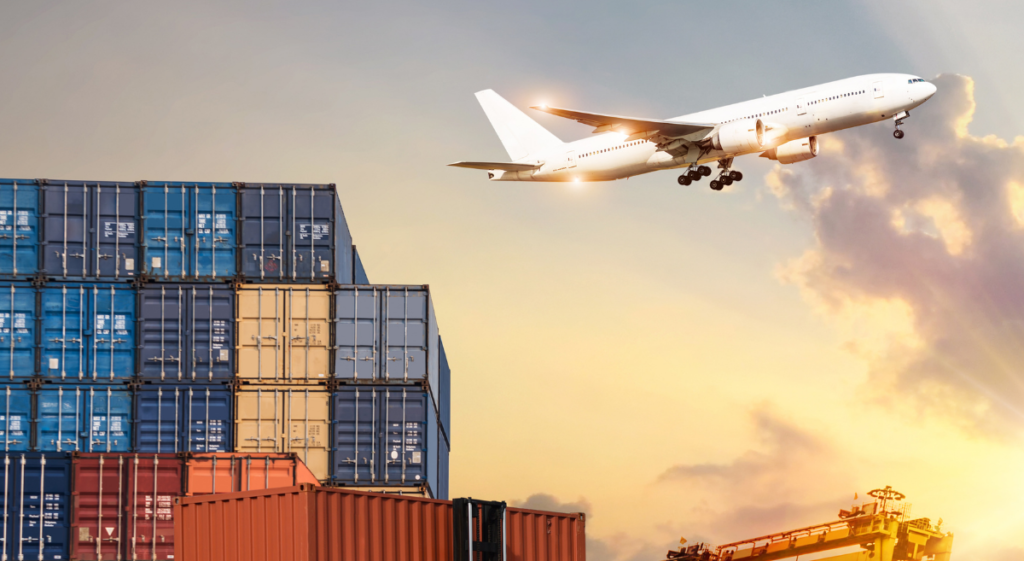
Air Freight vs Sea Freight: Key Differences
Before diving deeper, let’s look at a direct comparison:
| Factor | Air Freight | Sea Freight |
|---|---|---|
| Transit Time | 3 to 10 days | 20 to 40 days |
| Cost | $4 to $10 per kg | $2,000 to $8,000 per container |
| Best For | Urgent, small shipments | Bulk, heavy cargo |
| Reliability | High | Moderate |
| Environmental Impact | High | Lower |
Air freight can deliver goods in as little as 3 to 7 days, while ocean freight typically takes 25 to 40 days depending on the route and port conditions . This fundamental difference is what drives most shipping decisions.
Cost Comparison: Air Freight vs Sea Freight
Cost is often the most critical factor when it comes to shipping from China to USA.
Air freight is significantly more expensive than sea freight. In many cases, it can cost 5 to 10 times more, and sometimes even up to 12 to 16 times higher than ocean shipping . Typical air freight rates range between $4 and $10 per kilogram, depending on volume and urgency .
On the other hand, sea freight pricing is based on container size or cubic meters. A full container load can cost anywhere between $2,000 and $6,000, making it far more economical for large shipments .
In case of shipping from China to USA, this cost gap becomes even more significant as shipment size increases. For heavy cargo, sea freight is almost always the better financial choice.
Transit Time: Speed vs Planning
Speed is where air freight clearly dominates.
Air shipping from China to USA typically take between 5 to 10 days, and in some express cases, even as fast as 2 to 3 days . This makes air freight ideal for businesses that need fast inventory turnover or are dealing with time-sensitive goods.
Sea freight, however, requires careful planning. Transit times range from 20 to 40 days, with additional time needed for port handling and customs clearance .
While slower, sea freight allows businesses to significantly reduce costs if they can plan their inventory ahead of time.
Shipment Size and Weight Considerations
The size and weight of your shipment play a major role in deciding the shipping method in the process of shipping from China to USA.
Air freight pricing is calculated using either actual weight or volumetric weight, whichever is higher. This means bulky but lightweight items can still be expensive to ship by air .
Sea freight, in contrast, is ideal for heavy and large shipments. Whether you choose LCL or FCL, the cost per unit decreases as shipment volume increases. For shipments over 500 kg, sea freight is generally the most cost effective option .
When to Choose Air Freight
Air freight is the better option when speed and reliability matter more than cost.
It works best for high value goods, such as electronics or medical supplies, where the shipping cost is a small percentage of the product’s total value. Industry benchmarks suggest air freight makes sense when shipping costs are under 15 to 20 percent of the product value .
It is also ideal for urgent restocking, seasonal products, and small shipments that need quick delivery.
When to Choose Sea Freight
Sea freight is the preferred choice for businesses looking to optimize costs.
It is especially suitable for bulk shipments, low margin products, and non urgent goods. Since sea freight allows for large volumes at a lower cost, it is widely used by wholesalers, manufacturers, and Amazon FBA sellers.
If your supply chain can handle longer lead times, sea freight offers significant savings and better scalability.
Reliability and Risk Factors
Air freight is generally more reliable due to frequent flight schedules and fewer delays. It also involves less handling, which reduces the risk of damage.
Sea freight, while reliable overall, is more prone to delays caused by port congestion, customs inspections, and weather conditions. However, it remains a stable option for long term logistics planning.
Environmental Impact
Sustainability is becoming an important consideration in logistics.
Air freight has a significantly higher carbon footprint compared to sea freight. Ocean shipping is more environmentally friendly, especially for large shipments, making it a better choice for businesses focused on sustainability.
How to Choose the Right Shipping Method
Choosing between air and sea freight depends on a balance of three key factors, cost, speed, and shipment size.
If you need fast delivery then shipping in case of shipping from China to USA small, high value goods, air freight is the right choice. However, if your priority is cost efficiency and you are shipping large volumes, sea freight is the better option.
Many businesses also use a hybrid strategy, combining both methods to optimize their supply chain.
The decision between air and sea freight is not about which option is better overall, but which one is better for your specific business needs.
Air freight offers unmatched speed and reliability, but at a higher cost. Sea freight, on the other hand, provides significant savings for large shipments, but requires longer planning cycles.
By understanding these differences, you can make smarter decisions when shipping from China to USA, reduce costs, and improve your logistics efficiency.